

Convergence & HIFHUB: Data Brief on Humanitarian Blended Finance (Dec 2025)

This brief identifies a set of blended finance structures and solutions that can be standardised and scaled to mobilise additional investment in support of humanitarian outcomes in Fragile and Conflict-affected Situations (FCS). For humanitarian actors and donors, it emphasises the additionality of blended finance not only in terms of mobilised capital, but critically, in terms of impact.
TRC & IFRC: A Model for National Society Resource Diversification
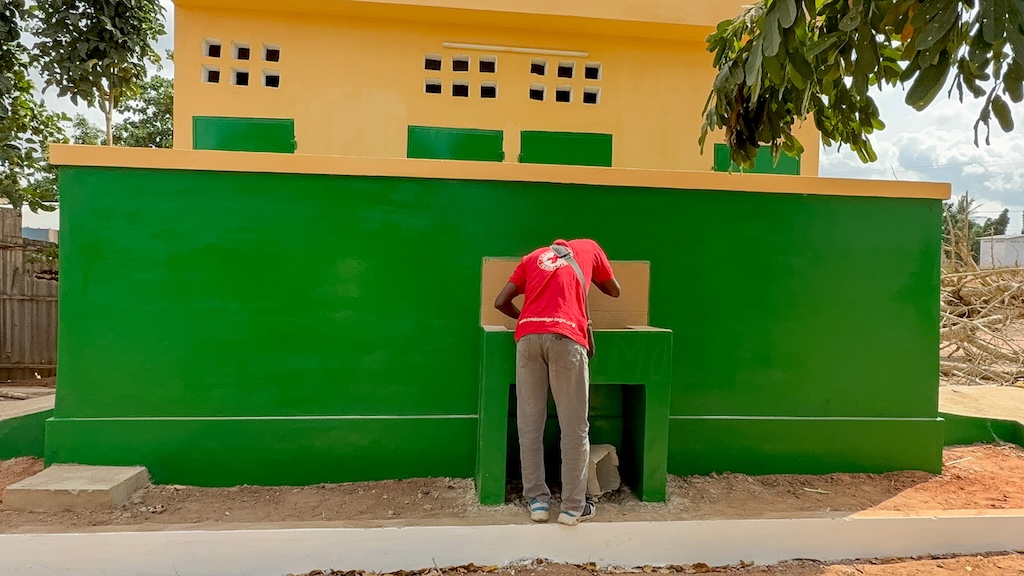
The Togolese Red Cross (TRC), working with IFRC and the Islamic Development Bank, became an implementing partner in a sovereign loan-financed sanitation programme — a first of its kind in Africa for a Red Cross National Society.
DRC & WFP Recommendations to COHAFA

On 12 November 2025, the Council working party on Humanitarian Aid and Food Aid (COHAFA) convened for a session on innovative finance, organised by the Ministry of Foreign Affairs of Denmark during the Danish Presidency of the Council of the European Union.
Trillions or Billions? Reassessing the Potential Investment in Emerging Markets and Developing Economies

What role can European institutional investors realistically play in financing development in emerging markets and fragile contexts? This 2024 ODI report takes a critical look at the assumptions behind the “trillions to billions” narrative – and calls for more grounded, strategic thinking to mobilise meaningful investment where it’s needed most.
The Impact of Impact Measurement

This 2024 elea (Foundation for Ethics in Globalization) white paper offers a framework for distinguishing impact investment strategies and highlights challenges in measuring impact across different models.
Convergence: State of Blended Finance

Convergence’s State of Blended Finance reports—published since 2017—focus on blended finance activities that mobilize private investment to emerging markets and developing economies (EMDEs). With this April 2024 edition, Convergence marks a new annual two-report cycle. Early each year, Convergence will release an edition of the State of Blended Finance report that provides analysis and insights on the entire blended finance market, including blended finance activity across sectors, regions, investors, investment structures, development impact generation, and more.
Gaining Ground on Refugee Financial Inclusion Through Advocacy, Innovation, and Partnerships
How can we ensure refugees have real access to financial services that support their dignity, resilience, and self-reliance? In this 2023 blog post, UNHCR explores the role of advocacy, innovation, and partnerships in advancing financial inclusion for displaced communities – a key piece of the puzzle in unlocking more sustainable humanitarian financing.
Donor Engagement in Innovative Finance: Opportunities and Obstacles

This 2019 (updated in 2023) report from the Donor Committee for Enterprise Development represents a first effort to review options for donor engagement in the area of innovative finance, as outlined by the Private Sector Engagement Working Group.
DG ECHO Pilot Initiative on Blended Finance for Humanitarian Aid: Lessons Learned
In this 2023 report, DG ECHO shares early lessons from its blended finance pilot initiative, reflecting on progress and highlighting key challenges for scaling humanitarian-private finance partnerships.
Blended Finance Solutions for Clean Energy in Humanitarian and Displacement Settings

This 2022 report from Norwegian Refugee Council offers an overview of how blended finance can deliver sustainable energy in humanitarian contexts, sharing lessons learned and recommendations for future improvements.
Beyond Compliance: Embedding Impact through Innovative Finance
This 2025 report from the World Economic Forum highlights how $185 billion is already mobilised by linking financial rewards to social outcomes. Case studies like South Korea’s social progress credits illustrate how businesses can maintain a competitive edge while addressing societal challenges.
Mainstreaming Humanitarian Blended Finance – HIFHUB Briefing Paper
Based on a comprehensive 2024 consultancy, this briefing paper explores how humanitarian blended finance (HBF) can strategically complement traditional grant-based funding. It clarifies the HBF concept, outlines opportunities and challenges, and identifies four key roles humanitarian actors can assume: convenors, advisors, enablers, and implementers.
New Financing Partnerships for Humanitarian Impact
This 2024 ODI report takes a hard look at the limitations of the current model, and why new approaches are urgently needed.
Debt Conversion for Humanitarian and Climate Impact

In 2023, the ICRC together with HIFHUB and other Movement partners, launched this publication on a new financing model: the Rapid Disbursing Debt Conversion Mechanism (RDDCM). Designed for speed and impact, the RDDCM could help unlock local currency quickly in crisis-affected countries, enabling National Societies to respond faster and deliver critical support where it’s needed most. It’s a promising tool for addressing complex humanitarian challenges, especially in conflict settings.
Engaging National Societies in Innovative Finance

How should National Societies in the Red Cross and Red Crescent Movement relate to humanitarian innovative finance? In 2023, the Swedish Red Cross and HIFHUB joined forces to publish a report focused on just that. It’s a timely and practical resource as momentum builds across the Movement.
Humanitarian Impact Finance: Instruments & Approaches
The 2024 Humanitarian Impact Finance: Instruments & Approaches report from IMD Business School, co-authored by HIFHUB’s Senior Advisor Juan Coderque, explores the tools and strategies shaping the future of humanitarian innovative finance. Developed in collaboration with Foundation Lombard Odier and the La Caixa Foundation it’s a practical guide to unlocking sustainable solutions.
Recommendations for MFA DK on Going Beyond Grants
In February 2025, Denmark co-hosted a high-level dialogue in Copenhagen focused on innovative finance for humanitarian and fragile settings. The event identified five strategic shifts through which Denmark can lead global action and reform incentive structures to accelerate progress.